
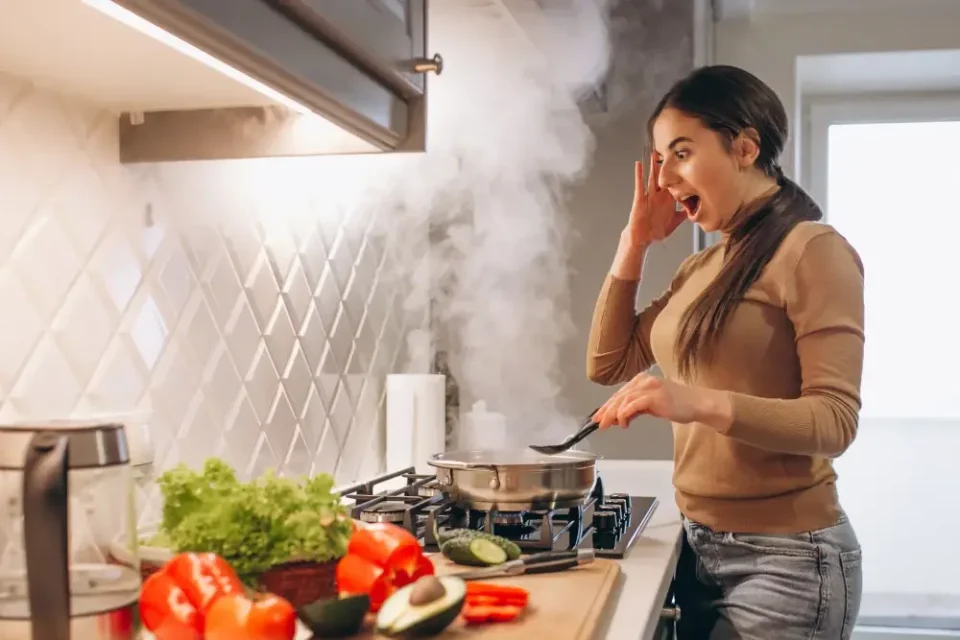
Most serious cooking accidents do not unfold during elaborate holiday banquets or ambitious pastry projects. They happen on ordinary Tuesday evenings, typically between the hours of five and seven, when someone is rushing to brown meat while balancing a phone call, helping with homework, or tending to a pot of boiling pasta.
The residential kitchen brings together open flame, intense heating elements, volatile cooking oils, and razor-sharp steel into what is often the highest-traffic room in the house. A lapse in focus or a sloppy countertop setup can turn a routine weeknight meal into a trip to urgent care. Building a safe cooking environment is not about turning your kitchen into a sterile laboratory; it is about establishing muscle memory, respecting physical hazards, and removing the hidden friction points that cause predictable mistakes.
Stovetop Discipline and Fire Management
The stovetop accounts for the overwhelming majority of home cooking fires, with unattended grease and high-heat oils serving as the primary culprits. Different cooking fats break down and combust at specific thresholds, and knowing these physical limits is essential for anyone who cooks over high heat.
When an oil fire breaks out, human instinct often urges people to do the single most destructive thing possible: throw water on the pan. Because water is denser than oil, it immediately sinks to the bottom of the blisteringly hot pan, instantly superheats into expanding steam, and atomizes the burning oil upward in a massive fireball.
Handling a pan fire requires calm, deliberate mechanical smothering:
-
Slide a metal lid or flat sheet pan smoothly over the rim of the cookware to cut off oxygen. Never drop a lid from above, which can push burning grease over the sides.
-
Shut off the heat source immediately and leave the pan completely undisturbed until it cools down to room temperature. Lifting the lid too early reintroduces oxygen and can cause the vapors to reignite instantly.
-
Keep baking soda within arm’s reach to snuff out small grease flare-ups. Never confuse baking soda with flour or baking powder; starch powders are combustible when dispersed in the air and will cause an explosion.
Beyond open flames, physical layout on the range matters. Always turn cookware handles inward, parallel to the edge of the counter. A handle protruding out into the walkway can easily snag on a loose apron, catch a stray elbow, or tempt a walking toddler, dumping scalding liquid down the front of the range.
Precision Knife Mechanics and Board Stability
There is a persistent myth among casual cooks that a sharp knife is more hazardous than a dull one. In practice, the opposite is true. A dull blade struggles to pierce the tough exterior skin of onions, tomatoes, or winter squash. When the edge refuses to bite, the cook instinctively exerts excessive downward muscle force, creating lateral instability. The moment that dull edge slips, all that forced kinetic energy sends the blade careening into fingers or countertops.
A properly honed and sharpened knife requires minimal downward pressure, allowing the cook to guide the blade cleanly through food with precision. However, even a sharp chef’s knife becomes a liability if the cutting surface underneath shifts mid-stroke.
Before slicing anything, anchor your cutting board. Smooth plastic and polished wood slide effortlessly across quartz, granite, and laminate counters. Placing a single damp paper towel or non-slip silicone mat flat beneath the board creates a firm grip that eliminates all lateral movement.
When holding the food you are cutting, adopt the classic claw grip. Curl the fingertips of your guiding hand inward like a bear claw, with your fingernails tucked safely away and the flat side of the knife blade resting lightly against your middle knuckles. Your knuckles serve as a physical fence that guides the cut while your fingertips remain completely shielded from the edge.
Finally, adopt a strict rule for blade washing: never drop a dirty knife into a sink filled with opaque, soapy dishwater. A submerged blade transforms the basin into a hidden booby trap for the next person who reaches in to wash dishes. Clean, dry, and store knives immediately after use.
Managing Thermal Shocks and Steam Burns
Liquid burns and steam scalding often cause deeper tissue damage than a momentary touch against a hot metal rack. Steam expands rapidly and carries significant thermal energy, making proper venting techniques critical.
When lifting a lid off a simmering pot or checking on a steaming Dutch oven, always tilt the lid away from your face. This directs the pressurized plume of steam toward the back splash wall rather than across your hands, face, and eyes. The same principle applies to opening a high-temperature oven: crack the door open an inch or two for two seconds to release the superheated air mass before leaning in to adjust a roasting pan.
Kitchen textiles are another common vector for thermal injuries:
-
Never use a damp or wet towel as an oven mitt. Water is an extraordinary thermal conductor. The moment wet fabric touches a hot cast-iron handle or baking stone, the moisture inside the fibers flashes into boiling steam, causing an immediate, severe steam burn that forces you to drop the hot cookware.
-
Replace scorched or thinned mitts. Silicone and heavy aramid-fiber gloves offer far superior heat resistance compared to thin quilted cotton pads that wear thin around the thumb seams.
-
Vent blenders when handling hot liquids. Pureeing hot vegetable soups in a standard upright blender can be disastrous if done incorrectly. The steam from the hot liquid expands against the sealed plastic lid, building pneumatic pressure that blows the lid off and sprays boiling puree across the kitchen. Always fill blenders less than half full, remove the center plastic insert from the lid, cover the opening with a folded kitchen towel to let steam escape, and pulse on the lowest speed first.
Electrical Layout and Clutter Control
Modern kitchens are packed with powerful small countertop appliances, from air fryers and electric pressure cookers to high-wattage kettles. These units draw substantial electrical current and generate serious radiant heat.
Avoid running high-draw appliances through thin extension cords or clustering multiple heavy-load heating devices into a single duplex outlet, which can overheat wall wiring. Keep all cords tucked back against the backsplash to ensure they cannot be yanked by pets or snagged by opening drawers.
Maintain a clear clearance zone of at least three feet around active cooking appliances. Loose paper towels, wooden spoons, plastic grocery sacks, and fabric potholders should never rest on the perimeter of the stovetop. It takes only a stray draft from an open kitchen window to push a paper towel roll into an active gas flame.
Essential Emergency Equipment Placement
Preparedness means keeping fire tools accessible where they are actually useful. Many households tuck their fire extinguisher deep inside the cabinet directly beneath the kitchen sink, or even underneath the stovetop itself. If a pan on the range erupts in flames, reaching through the heat to retrieve that extinguisher becomes impossible.
Mount a rated kitchen-appropriate fire extinguisher near the exit door of the kitchen, at least ten to fifteen feet away from the stove. This placement ensures you can grab the safety equipment while naturally positioning yourself with an unblocked exit path behind you. Additionally, keeping a specialized fiberglass fire blanket mounted on a nearby wall offers a mess-free, intuitive way to smother stovetop flare-ups without discharging abrasive chemical fire-retardant powder across your entire kitchen.
Safe kitchen habits take very little extra time to execute, but they radically change the daily working environment. By maintaining control over heat, keeping edges sharp and surfaces stable, and staying prepared for the unexpected, you can cook with complete confidence and keep your household protected.