
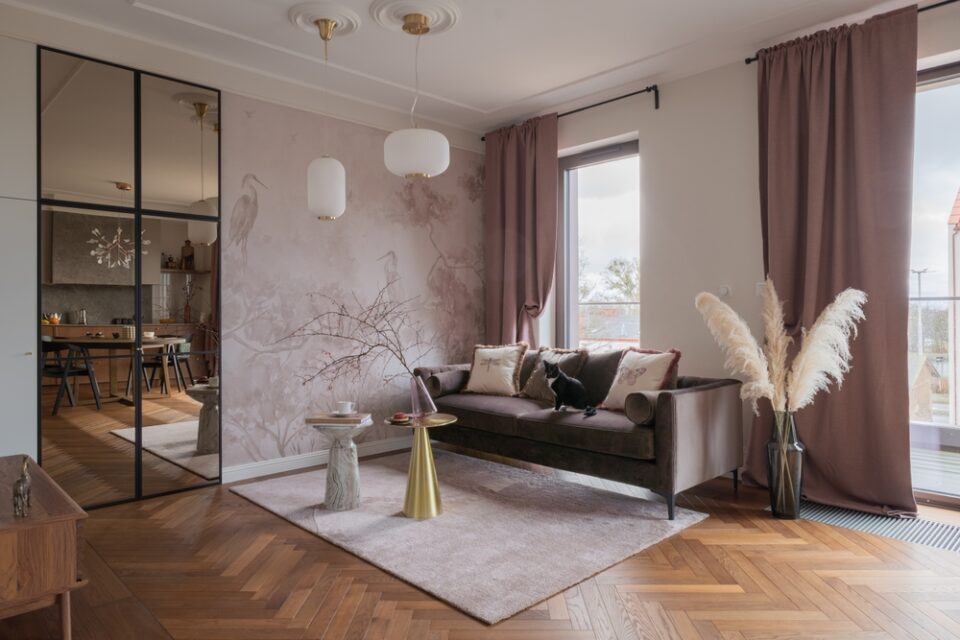
Selling a home in London often means presenting rooms that need to work hard for their size. Whether it is a Victorian terrace, an Edwardian conversion flat, or a modern apartment, buyers frequently place a high value on light and space. Mirrors can help reinforce both, but only when they are used thoughtfully.
Many sellers add mirrors as a last-minute decorative touch. In reality, their placement can influence how buyers perceive room size, natural light, and overall layout during viewings.
Use Mirrors to Support the Room’s Best Features
One of the key aims of staging interior design is helping buyers focus on the strengths of a property rather than its limitations. Mirrors work best when they reflect something worth noticing, such as a window, an attractive fireplace, a period feature, or a well-presented seating area.
In many London homes, natural light may only enter from one side of a room. Positioning a mirror opposite or adjacent to a window can help distribute that light more evenly throughout the space. This can make darker corners feel less enclosed without requiring additional lighting.
A mirror should never become the focal point simply because it is large. Buyers should notice the room first and the mirror second. If a mirror reflects clutter, crowded shelving, or awkward angles, it can draw attention to areas sellers would prefer buyers to overlook.
Match Mirror Size to the Scale of the Room
A common mistake is choosing mirrors that are either too small to make a visual impact or so large that they dominate the room.
Compact London flats often benefit from a single substantial mirror rather than several smaller ones. A well-proportioned mirror creates a clearer sense of depth and avoids visual clutter. In larger family homes, mirrors can be used selectively to help connect adjoining spaces and improve the flow between rooms.
The frame also matters. Heavy, ornate frames can feel out of place in smaller rooms, particularly where space is already limited. Simpler frames often work better because they allow the reflection itself to do the work.
When staging for sale, consistency is important. A mirror should feel like part of the room rather than an individual design statement competing for attention.
Focus on Areas Where Buyers Expect More Space
Some rooms naturally benefit more from mirrors than others.
Hallways are a good example. Many London properties have narrow entrance areas that can feel confined. A carefully placed mirror can create a stronger first impression by making the space appear more open as buyers enter the property.
Dining areas can also benefit, particularly in open-plan layouts where the mirror helps extend sightlines across the room. In living rooms, mirrors can increase the sense of width when positioned along longer walls.
Bedrooms require a slightly different approach. Buyers want bedrooms to feel calm and functional. A mirror that reflects natural light can contribute positively, but multiple mirrors or oversized reflective surfaces can sometimes feel distracting.
Bathrooms are another area where presentation matters. Clean, well-positioned mirrors can reinforce a sense of brightness and cleanliness, which are qualities buyers often notice immediately.
A professional home staging company will often assess which rooms genuinely benefit from mirrors rather than applying the same approach throughout the property.
Avoid Common Mirror Placement Mistakes
Mirrors can be surprisingly unforgiving when positioned poorly.
One frequent issue is placing a mirror where it reflects clutter. During viewings, buyers tend to scan rooms quickly. Reflections effectively double whatever is visible, including items that sellers may not realise are drawing attention.
Another mistake is creating visual confusion. Multiple mirrors facing each other can produce distracting reflections that make a room feel less settled. The goal is clarity, not complexity.
Height is equally important. A mirror should generally sit at a level that feels natural within the room. Hanging it too high can disconnect it from the furniture and architecture around it. Hanging it too low can make the room feel unbalanced.
Sellers should also pay attention to what appears in the reflection from different positions within the room. What looks appealing from one angle may reveal an unattractive corner when viewed from another.
Why Mirrors Influence Buyer Perception
Property viewings are often shaped by quick impressions rather than detailed analysis. Buyers form opinions about brightness, space, and comfort within moments of entering a room.
Mirrors help reinforce positive perceptions because they encourage the eye to travel further through the space. They can make rooms feel more open, improve the distribution of light, and create a stronger sense of balance.
Importantly, mirrors do not create space. They simply help buyers appreciate the space that already exists. This distinction matters because effective staging is about presenting a property’s genuine strengths rather than attempting to disguise its weaknesses.
When used carefully alongside decluttering, furniture arrangement, and good lighting, mirrors can contribute to a more appealing and coherent presentation.
Conclusion
Before arranging viewings, walk through each room and consider what a mirror is actually reflecting. The most effective placement is usually the one that highlights natural light, attractive features, or a sense of depth. A well-positioned mirror can help buyers see a room at its best, while a poorly positioned one can draw attention to exactly the wrong things.