
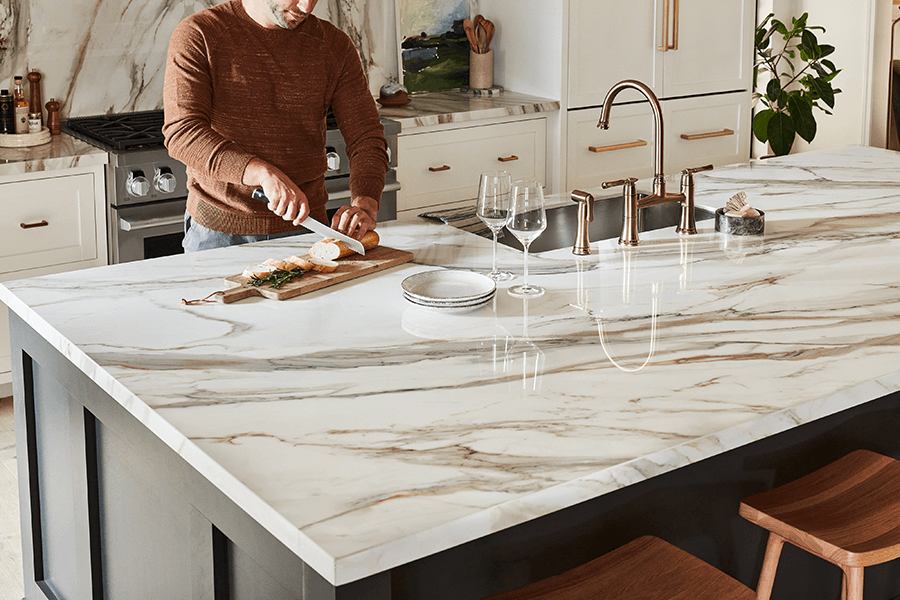
Choosing the right kitchen countertop can feel overwhelming. With so many materials, price ranges, and performance claims, it’s easy to get stuck. This guide breaks down the most popular kitchen countertop materials in plain language, so you can decide what actually fits your lifestyle, budget, and taste.
Why Countertop Material Matters
Your countertop isn’t just a design feature. It affects daily cooking, maintenance time, home value, and even resale appeal. The right choice balances durability, looks, and upkeep without creating stress later.
Granite Countertops
Granite is a natural stone known for its bold patterns and strength.
Pros
- Extremely durable and heat-resistant
- Each slab is unique
- Adds long-term home value
Cons
- Requires periodic sealing
- Can stain if left unsealed
- Higher upfront cost
Best for: Homeowners who want a premium, natural look and don’t mind occasional maintenance.
Quartz Countertops
Quartz is engineered stone made from crushed quartz and resin.
Pros
- Non-porous and stain-resistant
- No sealing required
- Consistent patterns and colors
Cons
- Can be damaged by excessive heat
- Slightly more expensive than granite in some regions
Best for: Busy kitchens that need durability with minimal upkeep.
Marble Countertops
Marble is elegant and timeless but comes with trade-offs.
Pros
- Luxurious appearance
- Naturally cool surface for baking
- Brightens kitchen spaces
Cons
- Prone to scratching and staining
- Requires frequent sealing
- Higher maintenance overall
Best for: Low-traffic kitchens or homeowners who prioritize aesthetics over durability.
Laminate Countertops
Laminate countertops are made from layered plastic bonded to particleboard.
Pros
- Budget-friendly
- Available in many colors and patterns
- Easy installation
Cons
- Not heat or scratch resistant
- Can’t be repaired once damaged
- Shorter lifespan
Best for: Rental properties, quick remodels, or tight budgets.
Butcher Block Countertops
Butcher block countertops are made from solid wood strips bonded together.
Pros
- Warm, natural appearance
- Can be sanded and refinished
- Gentle on knives
Cons
- Requires regular oiling
- Susceptible to water damage
- Not ideal near sinks
Best for: Rustic or farmhouse-style kitchens with moderate use.
Solid Surface Countertops
Solid surface materials are synthetic and seamless.
Pros
- Smooth, uniform look
- Scratches can be repaired
- Seamless sinks and backsplashes
Cons
- Less heat-resistant
- Can look less natural than stone
Best for: Contemporary kitchens focused on clean lines and easy repairs.
Quick Comparison Overview
- Most Durable: Granite, Quartz
- Lowest Maintenance: Quartz, Solid Surface
- Most Affordable: Laminate
- Most Luxurious Look: Marble
- Warmest Aesthetic: Butcher Block
How to Choose the Right Countertop
Before deciding, ask yourself:
- How much daily wear will it get?
- Are you okay with regular maintenance?
- Do you cook often or mostly entertain?
- Is resale value a priority?
Matching the material to how you actually use your kitchen prevents regret later.
Frequently Asked Questions
What is the most low-maintenance kitchen countertop material?
Quartz is considered the lowest maintenance because it’s non-porous and doesn’t require sealing.
Which countertop material is best for heavy cooking?
Granite and quartz handle daily cooking, spills, and heat better than most alternatives.
Are marble countertops practical for family kitchens?
Marble can work, but it requires careful maintenance and may show stains and scratches quickly.
How long do laminate countertops last?
With normal use, laminate countertops typically last 10–15 years.
Can butcher block countertops be used near sinks?
They can, but frequent exposure to water increases the risk of warping and damage.
Do countertops affect home resale value?
Yes. Stone countertops like granite and quartz often improve resale appeal.
Is it possible to mix countertop materials in one kitchen?
Absolutely. Many kitchens use different materials for islands and perimeter counters for function and style.